Table of Contents
- What “good” looks like for call-led services
- Categories, services and attributes that set intent
- The call path: button, hours, messaging
- Reviews and photos that support booking confidence
- GBP + site money pages + Ads location assets
- Weekly 20-minute GBP operating rhythm
- FAQs
- Next step: staff the storefront for calls
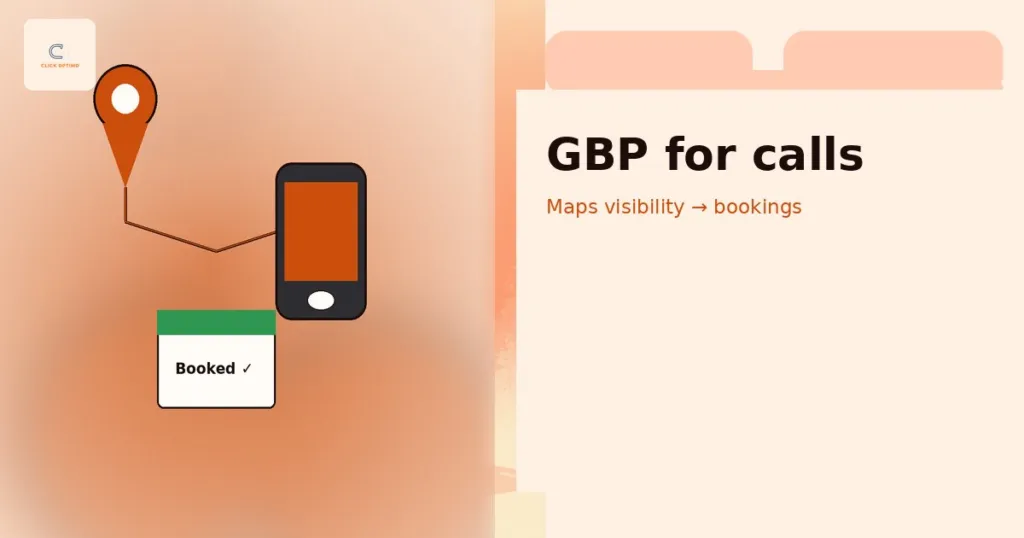
Ranking screenshots look impressive. Ringing phones look like a business. Google Business Profile (GBP) for calls is the discipline of treating Maps as a staffed storefront: categories that match intent, services that set expectations, reviews and photos that build confidence, and a call path that actually connects. Visibility without conversation is vanity.
This guide is for service businesses — home services, trades, clinics, professional firms — across the US, UK, AU, CA and NZ. Call-oriented GBP hygiene, not guaranteed Map-pack promises. Soft next steps: a Growth Diagnostic when local, Ads and tracking disagree, or SEO for service businesses when GBP and site money pages need one story.
Owners often chase pack position while the call button sits behind wrong hours, a dead number or a profile that lists every category except the one customers search. Pair GBP work with local SEO and Google Ads working together so organic Maps, paid location assets and site pages reinforce each other. Soft proof of method sits on Results.
Call-oriented hygiene is mostly boring ops: accurate data, fast answers, honest photos, and a scoreboard that includes Maps conversations. Exciting “rank hacks” without that foundation produce screenshots, not bookings.
What “good” looks like for call-led services
“Good” GBP for call-led services means: accurate primary and secondary categories, a complete services list, correct hours (including special hours), a working call button, fresh photos of real work, and review velocity with thoughtful replies. The profile should answer the same questions a receptionist would: Do you do this job? In my area? Can I reach you now?
Measure outcomes in the Performance report metrics you care about — calls, messages, bookings — not only “views.” Join Maps-driven calls to CRM stages the way you would for Ads; see track booked calls, not clicks and Analytics & tracking.
“Good” also means the profile survives a stranger’s five-second scan on a phone: clear name, recognisable category, recent review snippet, open/closed status that matches reality, and a call button that works. If any of those fail, fix them before you debate pack position.
Calls vs direction requests vs site clicks
Different actions signal different jobs:
- Calls — primary for many home services and appointment-led firms; optimise hours, button and missed-call handling.
- Direction requests — strong for storefronts and clinics with walk-in or visit intent; still need a clear arrival experience.
- Website clicks — useful when the site books better than a cold call; ensure money pages convert (see service ad landing pages for conversion patterns that also help organic).
Do not declare victory on directions alone if your model is phone-booked jobs. Align profile emphasis and measurement to the diary.
Week to week, watch the mix. A spike in site clicks with flat calls may mean the profile is sending traffic to a weak money page. A spike in calls with flat booked may mean handling or offer fit — not a GBP “ranking problem.” Use the Performance report as a funnel, not a vanity dashboard.
Categories, services and attributes that set intent
Categories are the first intent filter. Choose the most accurate primary category; add secondaries that reflect real services — not a kitchen-sink list that confuses Google and customers. Complete the services list with names customers use, not internal jargon. Attributes (women-led, wheelchair accessible, online estimates, and so on) help when true; fake attributes create trust debt.
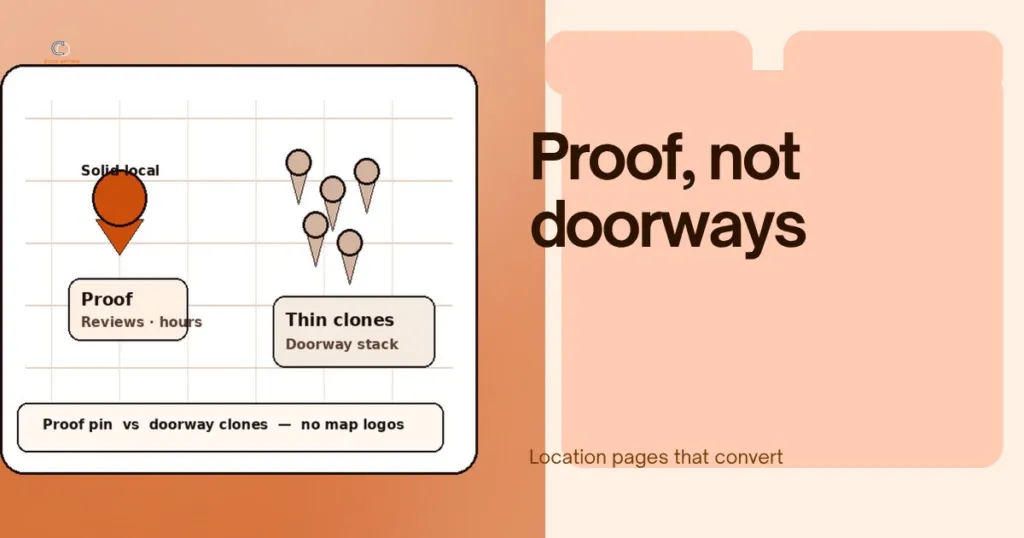
Keep NAP (name, address, phone) identical to site and directories. One story across GBP, Google Ads location assets and money pages reduces confusion and wasted clicks. The services hub and SEO for service businesses support the site half of that story.
Services list copy should mirror the language on your money pages and ads — including exclusions where helpful (“residential only,” “no criminal defence”). Attributes and products/services fields change over time; audit quarterly so abandoned offers do not linger and new offers appear the week you launch them.
Service-area businesses vs storefront realities
Service-area businesses (SABs) hide or deemphasise a public street address when appropriate and define service areas honestly — do not claim regions you will not serve. Storefronts need accurate address, parking/arrival notes and hours that match the door. Mixing SAB and storefront signals (or using a virtual office as a fake shopfront) creates policy and trust risk. Match the profile type to how you actually operate.
If you operate hybrid (shopfront plus mobile crews), make the primary experience obvious on the profile and site so callers know whether to visit or expect a van. Ambiguity here creates missed appointments and angry reviews.
The call path: button, hours, messaging
The call button only works if the number is correct, hours are truthful, and someone answers. Publish regular and special hours; set expectations for after-hours (voicemail SLA, emergency line, or “callback next morning”). Chat by text or WhatsApp (available in select regions) can catch overflow — but only if you staff replies with the same urgency as calls. Missed Maps calls are expensive reputation events: reviewers notice.
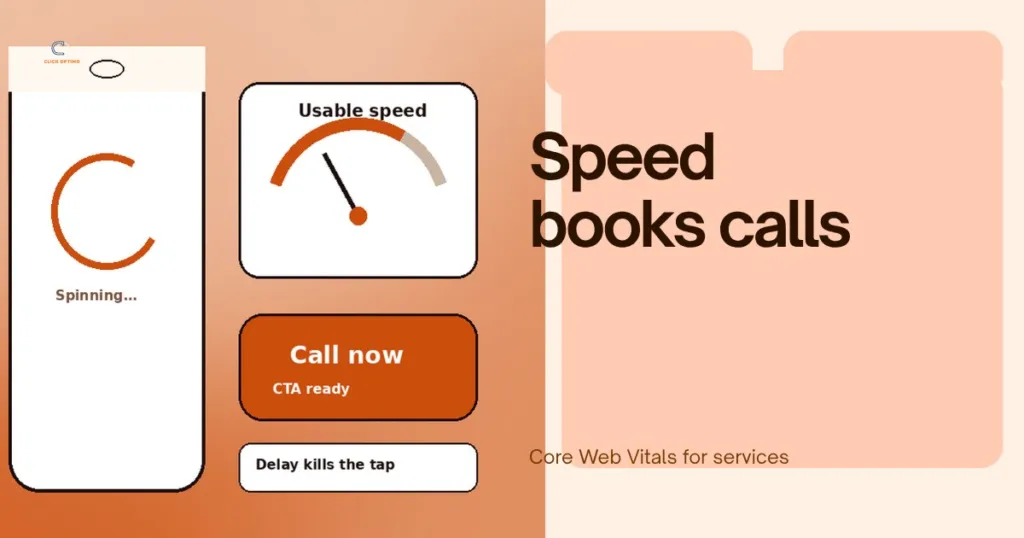
Train the front desk to ask how the caller found you and to log source without inventing attribution myths. Capacity still rules: buying more Maps visibility while phones go to voicemail is the same leak as Ads waste — see the wasted spend checklist mindset applied to organic discovery.
After-hours expectations deserve explicit profile text and a real process: emergency number, next-morning callback promise, or closed with honest hours. Misleading “open now” during holidays creates one-star reviews faster than any competitor bid. Messaging apps are a backup, not a substitute for a staffed call path on call-led models.
Tracking GBP calls without wrecking Ads attribution (high level)
Where practical, track GBP calls so Maps-driven conversations sit beside Ads and organic site calls. High-level options include a dedicated GBP number in call tracking, or CRM fields that capture “Maps / GBP” when the main number is shared. Avoid reckless number swapping that breaks NAP consistency or confuses Ads call reporting. Detail lives in Analytics & tracking and the GA4 + call tracking + Ads stack. Deduplicate when the same customer clicks Ads then dials GBP.
Ops rule: One scoreboard — Spend (if paid) | GBP calls/messages | Site calls/forms | Booked. If GBP is invisible on the scoreboard, you cannot fund it intelligently.
Reviews and photos that support booking confidence
Reviews are social proof for the call. Ask for reviews ethically after good jobs; respond to all reviews with specifics (service type, courtesy) without gated or incentivised schemes that violate policy. Photos should show real vans, teams, before/after work and premises — not endless stock. Google has replaced public Q&A with AI-generated answers drawn from your profile, reviews and website, so state your pricing approach, areas served and emergency availability there with the same facts.
Review velocity and photo freshness support confidence; they do not guarantee pack rank. Use them to convert the visibility you have.
Response templates help speed without sounding robotic: thank the customer, name the service, invite a follow-up if needed, and take complaints offline when appropriate. Photos should be dated in practice — rotate seasonally so the profile does not look abandoned. Team shots beat anonymous stock; job-site proof beats abstract icons.
What not to do (policy risks — high level)
Do not gate reviews, buy fake reviews (now also illegal in the UK and US), keyword-spam the business name, drop fake pin locations, or post false claims about competitors. Do not post offers you cannot honour. Policy enforcement can suspend profiles — recovery burns months. When unsure, prefer accuracy over aggressive “local hacks.” Ethical local growth beats short-term Map-pack theatre.
Also avoid stuffing every possible secondary category “just in case.” Irrelevant categories dilute relevance and invite customer mismatch. Fewer true categories plus a complete services list usually serve call-led firms better than a bloated taxonomy.
GBP + site money pages + Ads location assets
One NAP story across GBP, location/service pages and Ads location assets. Hours, phone and service areas must match. Site money pages should convert the click GBP sends; Ads location assets should not advertise a different phone narrative. When local SEO, Ads and tracking are siloed, cost per booked call becomes unreadable. Soft next step when the system needs a rebuild: the 90-Day Lead Engine.
Practically: freeze a single NAP source of truth, update GBP and site the same day, and only then refresh Ads location assets. When you change a tracking number, sequence the cutover so GBP, site footer and Ads do not disagree for a week. Landing patterns that convert paid clicks — message match, call path, thank-you hygiene — also raise the value of every Maps site click; see service ad landing pages that book calls.
A short Growth Diagnostic ranks local presence, Ads and tracking together when the pack looks fine and the diary does not.
Weekly 20-minute GBP operating rhythm
Twenty focused minutes beats quarterly panic:
- Check the Performance report: calls (taps on the call button), messages, direction requests, website clicks — note week-on-week shifts.
- Reply to new reviews; flag policy risks.
- Confirm hours/special hours (holidays, storms, staff leave).
- Add or refresh one real photo or short post tied to a live offer/service.
- Spot-check NAP on site and top directories; fix drift.
- Log GBP calls into CRM source fields for the diary join.
Escalate structural gaps (wrong category, weak money pages, broken tracking) to SEO for service businesses or the 90-Day Lead Engine. For agency accountability on the paid side of local, see brief or fire a Google Ads agency. Related conversion hygiene: negative keywords for services and landing pages that book calls.
Put the 20-minute rhythm on a recurring calendar with a named owner. If the Performance report shows calls rising while booked stays flat, the problem is offer, handling or tracking — not another photo upload. If calls are flat while competitors out-post you, fix categories, services and review ops before blaming the algorithm.
FAQs
How do I get more calls from Google Business Profile?
Ensure accurate categories and services, complete call-friendly hours, strong photos/reviews, and a frictionless call button—then respond quickly when the phone rings.
Do GBP rankings guarantee more booked jobs?
No. Visibility helps discovery; booking depends on trust, offer fit, speed-to-lead and measurement of what happens after the call.
Should I track calls from Google Business Profile?
Yes where practical—so you can see Maps-driven conversations alongside Ads and organic site calls without double-counting carelessly.
Are posts worth the time?
Yes, as a sales aid: they help clarify services and objections. Google has replaced public Q&A with AI-generated answers, so keep posts, services and website FAQs accurate and consistent with your money pages.
Does GBP replace local SEO on my website?
No. GBP and conversion-focused location/service pages reinforce each other.
How can ClickOptimo help?
A Growth Diagnostic reviews local presence, Ads and tracking as one system. Book via /book/.
Next step: staff the storefront for calls
Do not confuse a Map-pack screenshot with a full diary. Fix categories and services, honour hours, answer the phone, earn real reviews, and join GBP calls to the same scoreboard as Ads. Staff the storefront every week — twenty minutes of hygiene beats a quarterly scramble. When you want a guided pass across local, paid and tracking, book a short diagnostic.
Book a Growth Diagnostic — twenty minutes, gaps ranked by diary impact.
More context: Growth Diagnostic · services · SEO for service businesses
growth@clickoptimo.com · +91-8497982579