Table of Contents
Last-click reporting lies politely when advice takes weeks. A prospect Googles the job, reads a service page, calls once and hangs up, returns via brand search, then books after a referral nudge — and the report crowns whichever click happened to be last. Attribution for service businesses is not an academic model dump. It is a practical trust model: credit the path that books the diary, not the last click you like.
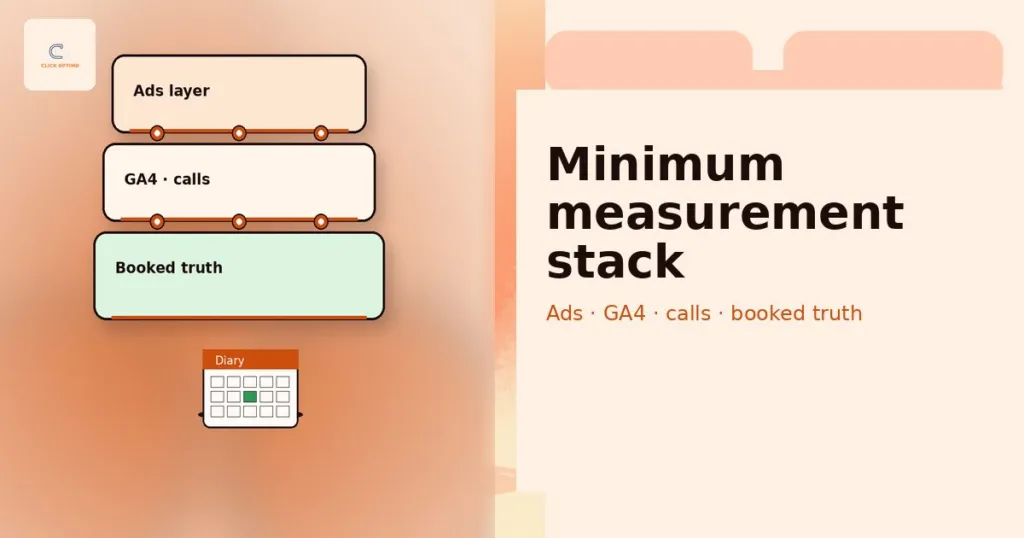
This blueprint is for appointment-led firms — home services, trades, clinics, professional practices — across the US, UK, AU, CA and NZ. No vendor affiliate push. Soft next steps: a Growth Diagnostic when Ads, call tracking and CRM disagree, or the 90-Day Lead Engine when measurement needs a time-boxed rebuild with Analytics & tracking. Foundations for the stack sit in the GA4 + call tracking + Google Ads measurement guide.
Owners often cut “underperforming” channels that quietly assist bookings because the scoreboard only celebrates the final click. Soft proof of method sits on Results; logos do not replace diary-reconciled reporting. Start with clean primary conversions and assisted views before buying multi-touch theatre.
Write the journey you actually see in the CRM: channels that appear before “booked,” not the journey a platform dashboard invents. Receptionists know when a “new lead” was already a three-call regular. Bring that qualitative path into monthly reporting so assisted views have a human check. Attribution without diary literacy is still theatre.
Why service attribution is different
Service journeys rarely look like eCom checkout. Multiple visits, missed calls, emails, receptionist notes, partner referrals and “spouse needs to confirm” delays are normal. Consideration windows stretch from same-day emergency jobs to multi-week professional consultations. A single last-click lens under-credits SEO and early Ads that created trust, and over-credits branded search or a direct revisit. That distortion drives bad budget decisions: pause the assist, keep the vanity closer, wonder why the diary thinned.
Measure what the business sells: conversations and bookings, not only form thank-yous. Pair attribution work with cost per booked call and track booked calls, not clicks so the north star stays commercial. Soft method proof can point to Results; never invent multi-touch lift percentages.
Booked call as the north-star event
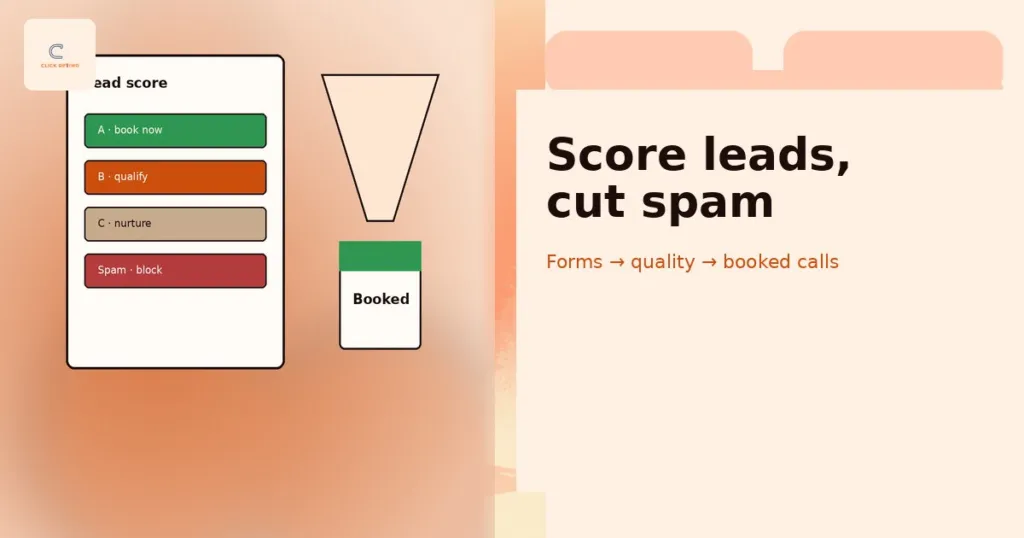
Define booked the same way across Ads, GA4, call tracking and CRM: a diary event the front desk recognises, not a 10-second ring or an unqualified form. Use rings and raw form submits as secondary diagnostics. When every phone ring counts as a primary conversion, Smart Bidding and last-click reports optimise for noise. Prefer qualified conversations or booked appointments as primary where possible; document the definition so agencies cannot redefine “lead” each month — same standard as briefing or firing a Google Ads agency.
Assisted conversions without drowning in models
Assisted conversions are channels or campaigns that helped a prospect move forward even if they were not the last click before an enquiry or booked call. Owners can use GA4 and Google Ads views without drowning in academic model catalogues: look at which campaigns appear early on paths that end in bookings; compare last-click vs data-driven summaries at a high level (Google retired position-based and other rules-based models in 2023); watch branded search absorbing credit that earlier non-brand and SEO earned. You do not need perfect multi-touch software on day one. You need clean primary conversions, consistent UTM/parameter hygiene, and a habit of reading assists before cutting budget.
Practical rhythm: monthly, pull paths or assisted reports for money outcomes only. Ask: if we paused this early-touch campaign, would bookings still arrive via brand alone? Tie SEO assists to durable money pages and SEO for service businesses; tie paid assists to Google Ads for service businesses. Soft next step when reporting and campaigns need one rebuild: the 90-Day Lead Engine.
When Ads and GA4 disagree on assists, do not pick the flattering one. Reconcile event definitions, time zones, consent loss and duplicate tags first. Only then compare model summaries. A one-page “definition of booked” shared by marketing and operations prevents months of arguing about which chart is real. Soft proof of method can sit on Results; conflicting definitions cannot.
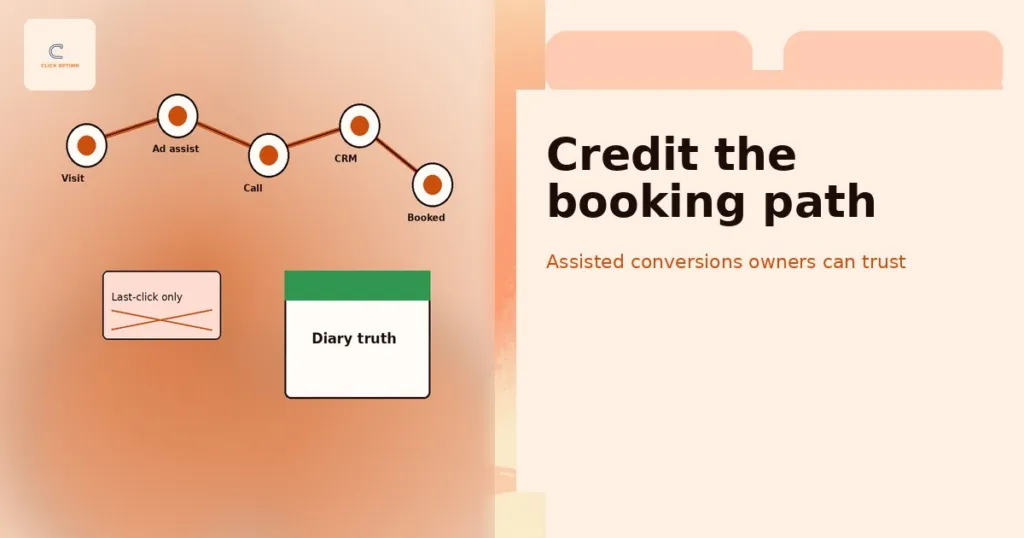
Path sketch: Non-brand Ads or SEO → money page → call miss → brand search → booked. Last-click alone would fire the wrong channel.
Path diagram for the team whiteboard: early non-brand or SEO touch → money page → missed call → brand search or direct → booked. Circle the assists; cross out any report that only celebrates the last node. That sketch beats a twelve-model slide when owners decide budgets.
Windows that match your sales cycle
Conversion windows should resemble how long buyers take to book in your vertical. Emergency trades may need shorter windows; consultative services often need longer lookbacks so early research clicks still join to the booking. Misaligned windows make assists invisible or inflate stale credit. Review windows when sales cycle length changes seasonally or when CRM stage timing shifts. Match reporting periods to the same logic — judging a six-week sales cycle on seven-day last-click is how good assists get killed.
Windows also interact with seasonality: a heating firm’s consideration in autumn is not the same as midsummer. Revisit lookbacks when demand shape changes, not only when a platform UI ships a new default. Document the window next to the definition of booked so successive agencies inherit both.
Choosing call tracking without wrecking attribution
Call tracking is essential for services and dangerous when misconfigured. Dynamic numbers must preserve campaign parameters so Ads and GA4 still know which click started the path. Duplicate conversion firing (Ads tag + call vendor + thank-you page all claiming the same booking) wrecks bidding and attribution. CRM handoff should carry click IDs or reliable join keys where possible so offline stages can import without inventing new “leads.” Test that swap numbers remain dialable on mobile and that consent/tag setups still fire — detail lives in Analytics & tracking and the measurement stack post.
Common failure modes: static numbers on paid landings with no parameters; vendor pixels firing on page load as conversions; double-counting form + call for one person; stripping GCLID on redirects. Fix measurement before arguing about models. Ethical remarketing and list building also depend on clean events — see ethical remarketing for services only after tracking maturity exists.
Run a quarterly “wreck check”: sample twenty attributed bookings and walk the path backwards — parameters present, single conversion fire, CRM stage honest, call recording or note matches. If half fail, pause offline imports and Smart Bidding aggressiveness until hygiene returns. Call tracking vendors change scripts; sites change themes; wrecks recur without ownership.
Vendor selection questions (non-endorsement)
Ask vendors explicitly (no endorsement implied): How do you preserve Google Ads click identifiers? Where do conversions fire — and can we disable duplicates? How do calls sync to GA4 and CRM? What happens on consent decline? Can we define qualified duration or disposition? How are dynamic numbers handled on AMP, single-page apps or chat overlays? Prefer answers you can test in a staging week over slideware. Choose tools that serve booked-call truth; do not choose tools that invent a prettier ROAS.
Prefer tools you can audit. If a vendor cannot explain duplicate suppression in plain English, keep looking. Non-endorsement means you still owe yourself a wreck check after install — slides are not proof.
Offline and CRM stages
Online conversions stop at enquiry; revenue lives in CRM stages — qualified, booked, showed, won. High-level import patterns: send booked or qualified milestones back to Google Ads as offline conversions when click IDs or hashed contact details exist (enhanced conversions for leads, now uploaded via Data Manager); keep human QA so spam and wrong jobs never train bidding; align stage names with the diary, not marketing poetry. Import latency should still fit your sales cycle window. If the CRM cannot show form/call → booked within a week, pause creative tests until the join works — otherwise you optimise the wrong field.
Owner checklist: one definition of booked; one owner for import quality; weekly sample of ten “conversions” against the diary; no silent stage renames by vendors. Soft next step when Ads, pages and CRM need a guided pass: book a Growth Diagnostic.
Offline imports should never become a dumping ground for every CRM status. Import milestones that reflect commercial progress you would defend to an owner: booked, showed, won — not “email opened.” Train whoever marks stages that those labels now spend real money. Human QA is cheaper than automated bidding on vanity stages.
Reporting cadence for owners
Keep reporting boring and diary-tied:
- Weekly — Spend | Enquiries | Booked (same definitions); spot-check call recordings or dispositions.
- Monthly — Assisted vs last-click view on money outcomes; window sanity; duplicate conversion audit.
- Quarterly — CRM import quality; vendor questions revisited; whether complexity is earned.
Owners should not live inside model comparisons daily. Partners should bring a scoreboard that survives a receptionist’s “that wasn’t a real booking” test. Use Analytics & tracking as the system home; soft next step for a time-boxed rebuild: the 90-Day Lead Engine and the day-by-day Lead Engine walkthrough. The services hub connects Ads, SEO and measurement when silos invent conflicting wins.
If reporting cadence slips, attribution debates return as gut feel. Protect the weekly Spend | Enquiries | Booked ritual even when campaigns are “fine.” Fine is when the diary and the models agree often enough to trust budget moves. When they diverge, measurement work outranks creative tests — see the services hub for Ads, SEO and analytics as one system, not three excuses.
FAQs
What are assisted conversions for service businesses?
Channels or campaigns that helped a prospect move forward even if they were not the last click before an enquiry or booked call.
Why is last-click attribution risky for long sales cycles?
It ignores earlier research visits and calls that created trust. Owners may cut channels that quietly assist bookings.
How do I choose call tracking without breaking attribution?
Prefer setups that preserve campaign parameters, avoid duplicate conversion firing, and sync cleanly with Ads/GA4/CRM. Ask vendors explicitly how attribution is maintained.
Do I need multi-touch software on day one?
Not always. Start with clean primary conversions and assisted views; add complexity when data quality is proven.
Should every phone ring count as a conversion?
Prefer qualified conversations or booked appointments as primary where possible; use rings as secondary diagnostics.
How can ClickOptimo help?
Measurement-first Diagnostics align Ads, call tracking and CRM to booked-call truth. Book via /book/.
Next step: trust the path that books
Closing the loop: attribution trust is a product of definitions, joins and cadence — not a single “right” model. Keep models humble; keep the diary loud.
Do not fire channels on last-click vanity while assists and call tracking are broken. Define booked as the north star, read assisted views before cutting budget, choose call tracking that preserves parameters, import CRM stages with human QA, and keep a boring diary-tied cadence. When you want a guided pass across measurement and paid systems, book a short diagnostic.
Book a Growth Diagnostic — twenty minutes, gaps ranked by diary impact.
More context: Growth Diagnostic · services · Analytics & tracking
growth@clickoptimo.com · +91-8497982579